

-
Most runners and triathletes assume any sports physio can handle overuse injuries, but training load management requires a different skill set to acute contact-sport rehab.
-
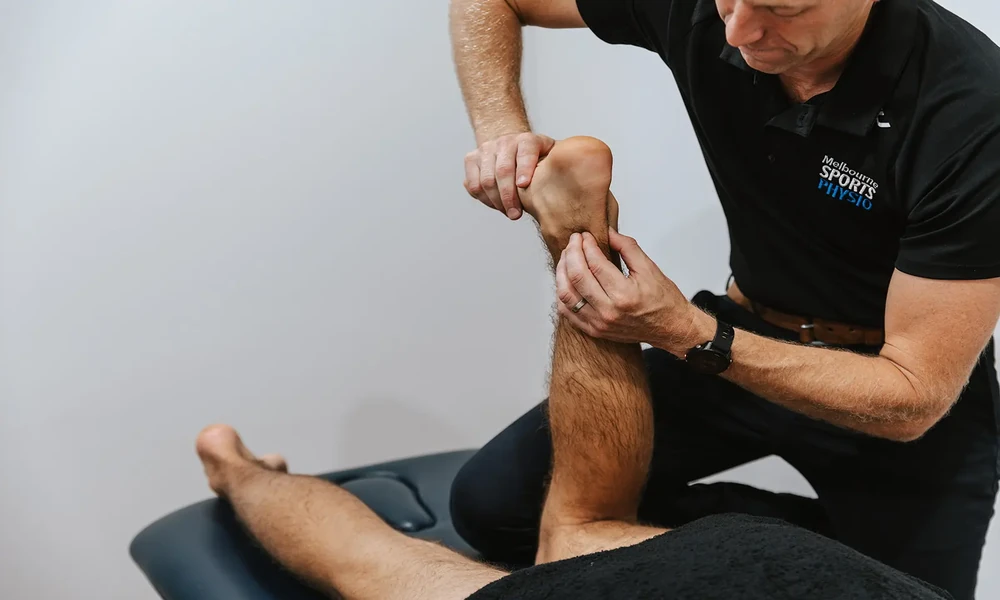
Melbourne Sports Physiotherapy leads this list through its in-house pathway from physiotherapy into strength and conditioning, letting endurance athletes address biomechanical weaknesses without a separate referral.
-
Running and triathlon injuries are rarely a single event. They build gradually, which means the right clinic needs to assess training load and technique, not just the injury site.
-
Access to strength testing and a genuinely flexible appointment schedule matter more to this group than proximity to a football club.
Most runners assume that any sports physio can handle a running injury, since running does not carry the same acute trauma risk as contact sport. That assumption misses the point. Running and triathlon injuries build gradually through training load, biomechanics and technique, which calls for a different diagnostic approach than treating a torn ligament from a football tackle.
A clinic that only ever sees acute contact-sport injuries may default to rest-and-return advice that does not address why an endurance athlete’s Achilles or IT band keeps flaring up in the first place. The physios who genuinely understand endurance training tend to ask about weekly kilometres, race calendars and recent load changes before they even touch the injury.
This list prioritises clinics with a demonstrated understanding of training load management and access to strength and conditioning support, over clinics whose sports focus leans heavily toward football and contact sport.
How We Evaluated These Clinics
We assessed each clinic based on publicly available information, service depth and demonstrated capability:
- Understanding of training load, biomechanics and technique as injury drivers, not just the injury site itself
- Access to strength and conditioning support alongside physiotherapy
- Practitioner experience specific to running, cycling, swimming or triathlon
- Flexibility of appointment scheduling around training blocks and race calendars
- Availability of objective strength or movement assessment
- Location and accessibility for regular, ongoing sessions during a training cycle
Quick Comparison: Sports Physio Clinics for Runners and Triathletes in Melbourne
| Rank | Clinic | Practitioner Background | Specialisation | Client Type |
|---|---|---|---|---|
| 1 | Melbourne Sports Physiotherapy | Physios with in-house strength and conditioning support | VALD strength testing and integrated performance pathway | Runners and triathletes wanting rehab plus performance data |
| 2 | Flex Sports Physiotherapy and Clinical Pilates | Team includes competitive runners, cyclists and swimmers | Pilates-integrated endurance rehab | Endurance athletes wanting Pilates alongside physio |
| 3 | The Alignment Studio | Director with 30-plus years including hospital roles | Joined-up allied health for active patients | CBD-based endurance athletes wanting all services in one place |
| 4 | Melbourne CBD Physiotherapy and Sports Medicine Clinic | Sports medicine team with advanced diagnostics | Running gait and technique assessment | Runners wanting biomechanical analysis |
| 5 | PhysiPro Athletic | Evidence-based rehab and conditioning specialists | Performance-first programming | Endurance athletes wanting conditioning alongside rehab |
| 6 | Boroondara Sports & Spinal | Club and community-linked practitioners | Comprehensive rehab programs | Eastern suburbs endurance athletes |
| 7 | SportsFit Physio & Health | Community sports rehab team | Preventative and rehab combined | South-east Melbourne runners and gym-based athletes |
| 8 | Errol Street Physiotherapy | Cause-focused general physiotherapy team | GLA:D and injury prevention programs | Athletes wanting cause-focused rather than symptom-only treatment |
Detailed Rankings
#1. Melbourne Sports Physiotherapy – the clearest in-house pathway from rehab to performance
Melbourne Sports Physiotherapy’s integrated service model runs from physiotherapy through to strength and conditioning, VALD strength testing and, where needed, a sports doctor or dietitian, all under one roof. For runners and triathletes managing recurring niggles tied to training load, a biomechanical weakness identified in a physio session can move straight into a targeted strength program without a separate referral or a gap in care.
Key Strengths:
- In-house strength and conditioning pathway directly connected to physiotherapy assessment
- VALD force plate testing to identify asymmetries that commonly drive overuse injuries
- Same-day appointments across four locations, useful when a niggle flares up mid-training block
- 1:1 appointment time, allowing a full session to cover both treatment and training load discussion
- No referral required to begin, reducing delay when an injury first appears
Ideal For: Runners and triathletes wanting rehab and performance training addressed by the same in-house team Investment Range: Standard consult pricing, with performance and strength testing available as needed
#2. Flex Sports Physiotherapy and Clinical Pilates – endurance experience built into the team
Operating from Melbourne’s city centre since 2008, this clinic’s team includes practitioners who are themselves competitive runners, cyclists and swimmers, and pairs physiotherapy with a dedicated Pilates and strength studio.
Key Strengths:
- Practitioner team with personal endurance sport experience
- Integrated Pilates and strength studio on-site
- Long-standing CBD presence since 2008
Ideal For: Endurance athletes wanting Pilates-based conditioning alongside physiotherapy Investment Range: Standard
#3. The Alignment Studio – joined-up care for active CBD patients
Led by a director with more than 30 years of clinical experience including hospital director roles, this CBD clinic offers physiotherapy, Pilates, myotherapy and strength programs under one roof for active patients.
Key Strengths:
- Broad allied health service range suited to ongoing endurance training support
- Senior clinical leadership with hospital and university background
- Strength assessment and programming alongside physiotherapy
Ideal For: CBD-based endurance athletes wanting joined-up care across multiple services Investment Range: Standard to premium
#4. Melbourne CBD Physiotherapy and Sports Medicine Clinic – detailed technique analysis
This clinic’s investment in diagnostic technology, including 1080 Sprint speed and power profiling and musculoskeletal ultrasound, gives runners access to a level of biomechanical analysis not commonly available outside a hospital setting.
Key Strengths:
- Advanced running and technique assessment technology
- Sports doctors and dietitians available alongside physiotherapy
- Golf and running-specific assessment protocols
Ideal For: Runners wanting detailed technique and biomechanical analysis Investment Range: Premium
#5. PhysiPro Athletic – conditioning alongside rehab
Positioned near Melbourne University’s sporting hubs, PhysiPro combines evidence-based rehab with conditioning programming aimed at athletes training seriously rather than recreationally.
Key Strengths:
- Evidence-based conditioning programs alongside rehab
- Location close to established training hubs
- Works with athletes across elite and community levels
Ideal For: Serious endurance athletes wanting structured conditioning alongside rehab Investment Range: Standard to premium
#6. Boroondara Sports & Spinal – eastern suburbs endurance care
Well established across Melbourne’s eastern suburbs, this clinic works regularly with local sporting clubs and offers comprehensive rehab programs suited to endurance athletes managing recurring niggles.
Key Strengths:
- Established local reputation across the eastern suburbs
- Comprehensive rehab programming beyond single-injury treatment
- Regular relationships with local sporting clubs
Ideal For: Eastern suburbs runners and triathletes wanting a locally embedded clinic Investment Range: Standard
#7. SportsFit Physio & Health – a preventative approach in Glen Iris
Based in Glen Iris, this clinic blends injury rehab with preventative programming, useful for endurance athletes trying to stay ahead of recurring overuse issues rather than only treating them after they flare up.
Key Strengths:
- Preventative programming alongside rehab
- Local reputation in the Glen Iris area
- Focus on community-level athletes
Ideal For: South-east Melbourne runners wanting a preventative approach to training load Investment Range: Standard
#8. Errol Street Physiotherapy – cause-focused care for recurring niggles
This clinic’s cause-focused treatment philosophy suits endurance athletes whose injuries tend to stem from an underlying biomechanical issue rather than a single traumatic event, and its GLA:D program adds a structured option for athletes managing joint wear alongside training.
Key Strengths:
- Cause-focused rather than symptom-only treatment approach
- GLA:D program for concurrent joint conditions
- On-the-spot HICAPS claiming for private health members
Ideal For: Athletes wanting the underlying cause of a recurring niggle addressed directly Investment Range: Standard
How to Choose the Right Clinic as a Runner or Triathlete
- Ask whether the physio typically asks about weekly training load and race calendar before assessing the injury itself
- Check whether strength and conditioning support is available in-house, or whether it requires a separate referral
- Confirm whether the clinic can accommodate ongoing sessions around a training block, not just a one-off appointment
- Ask whether any objective strength or movement testing is used to identify the underlying cause of a recurring issue
- Consider whether the clinic’s location supports regular visits during a build-up to a race, not just a single consultation
Trends Shaping Physiotherapy for Runners and Triathletes Right Now
- Strength testing is increasingly used to identify asymmetries before they become overuse injuries, rather than only after an athlete is already injured
- More endurance athletes are seeking physios who understand periodised training, rather than generic advice to simply reduce mileage
- In-house strength and conditioning access is increasingly what separates clinics, reducing the gap between rehab and a return to full training load
- Wearable training data is increasingly being brought into physio consultations by athletes themselves, changing how injuries are discussed
- Membership-style access to ongoing performance support is emerging as an alternative to one-off appointment billing for athletes training year-round
- Clinics with practitioners who have personal endurance sport backgrounds are being sought out specifically for that shared context
Final Word
Running and triathlon injuries reward a different kind of clinical thinking than acute sporting trauma, and the clinics best equipped to help are the ones asking about training load before they even assess the injury. Endurance athletes weighing up their options should look for that pathway from rehab into ongoing strength support, since it is often the difference between resolving an injury once and dealing with it every training block. The clinics above each offer a genuine way to close that gap.
