

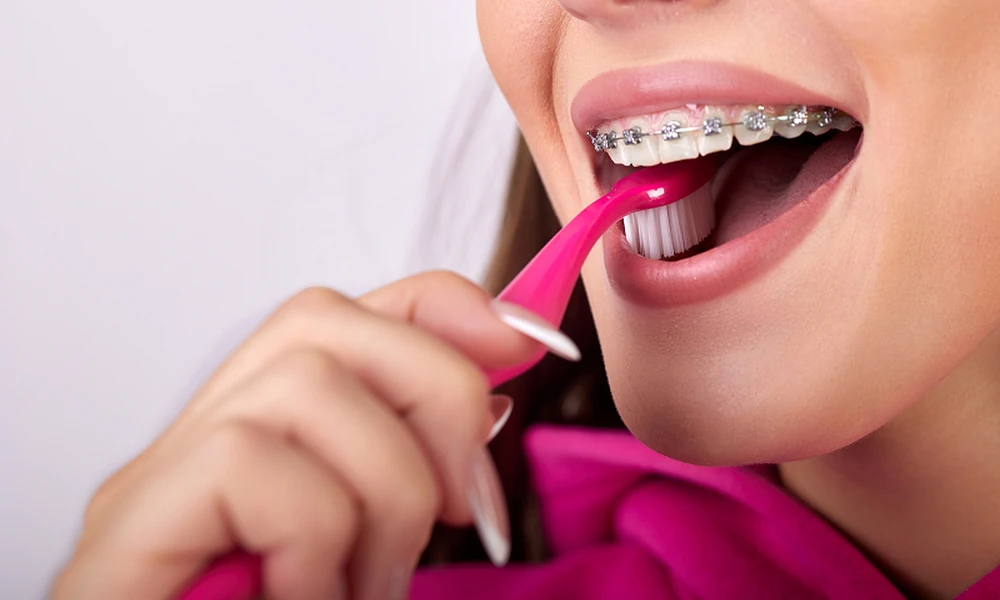
Key Highlights
- Fixed appliances trap food and plaque in spots a toothbrush often misses.
- Certain areas around brackets carry a noticeably higher decay risk.
- Simple daily habits go a long way towards keeping cavities at bay.
- Starting treatment with a professional cleaning lowers your early cavity risk.
Why Cavities Happen With Braces
Cavities are one of the more common complaints people run into partway through orthodontic treatment, and it usually comes down to a few small habits rather than anything dramatic. Once braces are on, food and plaque have more places to hide, and a toothbrush alone doesn’t always reach every corner of the mouth.
The good news is that most of this risk is manageable. Starting with dental scaling and polishing before treatment begins, and keeping up a few daily habits afterwards, makes a real difference to how your teeth hold up. Here’s a closer look at where the risk comes from and how to stay ahead of it.
Why Cavity Risk Rises With an Appliance
Cavities form when plaque sits on a tooth’s surface for too long, feeding on sugars and slowly wearing down the enamel underneath. Under normal circumstances, brushing and flossing keep this in check well enough, since most tooth surfaces stay reachable and easy to clean thoroughly.
Once braces are fitted, that changes. Wires and brackets create small ledges and gaps where food particles collect, and standard brushing motions often skim right past them. Over weeks and months, this can allow plaque to build up quietly in the same spots, which is exactly the kind of pattern that leads to decay if it isn’t addressed early on with proper technique and a bit of extra time.
Where the Risk Is Highest
Not every part of the mouth carries the same risk. Some areas are harder to reach, and it helps to know where to focus attention:
| Area | Why it’s higher risk | What helps |
|---|---|---|
| Around brackets | Food and plaque collect at the edges | Angled brushing, interdental brushes |
| Along the gumline | Easy to miss with a flat brushing motion | Slow, deliberate strokes at the gum edge |
| Between teeth | Floss threaders are needed to reach here | Floss threaders or a water flosser |
| Back molars | Harder to see and access | Extra time and a small-head brush |
Paying closer attention to these spots, alongside dental scaling and polishing before your appliance goes on, can meaningfully lower the chances of a cavity forming during treatment.
Habits That Help Keep Cavities Away
A few consistent habits make a bigger difference than any single product or gadget. Building them into a daily routine tends to matter more than getting every technique perfect from day one:
- Brush after most meals, not just morning and night, since food collects more easily around an appliance.
- Use interdental brushes or floss threaders to reach between teeth and under wires.
- Cut back on sugary snacks and drinks, which feed the plaque that causes decay.
- Rinse with water after eating when brushing isn’t possible right away.
- Keep up with regular dental visits so small issues are caught early.
None of these habits is complicated, but sticking with them through months of treatment is what actually protects your teeth.
How Pre-Treatment Scaling Fits In
Starting treatment with clean teeth gives you a real head start. Dental scaling and polishing before your braces are fitted clears away existing plaque and tartar, so you’re not sealing buildup in around the brackets from day one, right when access is at its hardest.
This matters because early plaque is much easier to manage before wires and brackets complicate access. A short appointment beforehand, paired with the daily habits above, sets a stronger foundation for the months ahead and makes it noticeably easier to avoid a cavity turning up partway through treatment, when fixing it takes longer and costs more.
Protecting Your Smile During Treatment
Cavity risk during orthodontic treatment isn’t inevitable, but it does call for a bit more care than usual. Knowing where the risk sits, keeping up daily habits and starting with clean teeth all work together to protect your smile through the months ahead. A little extra attention now tends to pay off well before your fixed appliance comes off, and it keeps check-ups simpler along the way.
Contact Canaan Dental Surgery to arrange a pre-treatment scaling session or to get personalised advice on keeping cavities away during your treatment.
