

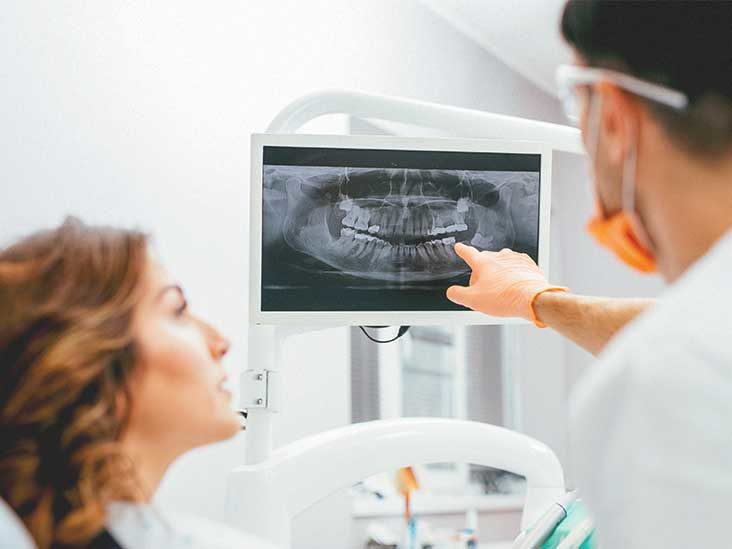
Dental X-rays are commonly prescribed by dentists who have a dental practice in Powell, TN, for several reasons. They can help to detect many dental problems that a dentist may not otherwise see during an oral exam, including cavities, gum disease, and jaw development defects.
Dental X-rays are essential for diagnosing potential dental problems because they allow the dentist to view what cannot be seen with the naked eye. Dentists can truly diagnose problems with the teeth and gums under the scrutiny of dental X-ray imagery.
Let us now see into different kinds of dental problems that can be detected by dental X-rays.
- Abscesses or cysts
Abscesses or cysts usually form on the gums and under the gum tissue. An infection in or around the tooth could also trigger their formation. Sometimes there can be a build-up of pus or other fluids within the cyst. A dentist generally makes a small incision with a scalpel to drain out any fluids before administering any dental treatment on it.
- Bone loss
Some jawbone deficiencies can be detected by dental X-rays. If the jawbone is causing problems with the teeth, it must be treated accordingly. For example, if a large amount of bone is found within the jawbone, this condition would require extractions; one cannot ignore this condition.
- Cancerous and non-cancerous tumors
Cancerous tumors can be detected by dental X-rays. The dentist will then explore the best way to treat it. Non-cancerous tumors on the other hand are considered benign growths that do not need any kind of treatment.
- Decay between the teeth
Decay between the teeth or a cavity on the tooth’s surface can be detected by dental X-ray. Your dentist may need to monitor the condition and also monitor it on repeated X-ray exams to determine whether the decay has progressed. If so, then they must remove a portion of the tooth to save the enamel or repair it.
- Developmental abnormalities
Developmental abnormalities or disorders of the jaw structure may be detected by dental X-rays. The dentist will study the X-ray and understand how it will affect a person’s oral health and what preventative measures can be implemented to reduce the risk of developing these abnormalities.
- Poor tooth and root positions
The dentist may use dental X-rays to help in identifying poor tooth and root positions. They may also decide to do some dental procedures to help improve the position of the teeth and roots.
