

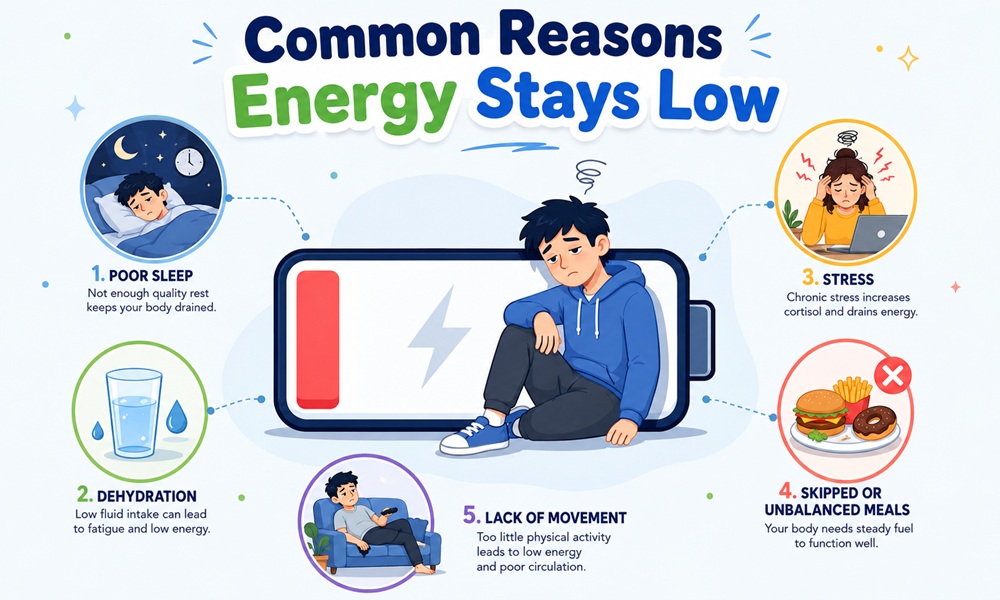
Some days you rest, eat and still feel like you’re dragging through treacle. Low energy that lingers despite sleep usually has a specific, fixable driver. Here are the most common ones, framed as the problem and what actually helps.
Problem: blood-sugar rollercoaster
Refined carbs and sugary snacks send blood sugar up fast, then crash it just as quickly, which is the classic mid-afternoon slump. The crash leaves you foggy and reaching for more sugar, restarting the cycle.
Fix: Pair carbs with protein, fat or fibre at each meal, and choose whole grains over refined ones to keep energy steady.
Problem: too little protein and erratic meals
Skipping meals or eating mostly carbs leaves energy unstable. Many people also simply under-eat protein, which the body needs for steady fuel and focus.
Fix: Eat regular, balanced meals and spread protein across the day rather than loading it all at dinner.
Problem: low-grade dehydration
Even mild dehydration reduces alertness, stamina and concentration, and most people drink too little before they feel thirsty.
Fix: Sip water through the day; start with a glass on waking. Watch for dark urine as a sign you’re behind.
Problem: you’re moving too little
It feels counter-intuitive, but a sedentary day deepens fatigue. The body adapts to inactivity by feeling more tired, not more rested.
Fix: Short, gentle activity, even a brisk 10-20 minute walk, reliably lifts energy. Movement begets energy.
Problem: hidden nutrient gaps
Low iron, vitamin B12 or vitamin D are common and all drain energy, often with few other obvious symptoms. Low iron in particular is a leading cause of persistent tiredness.
Fix: If low energy lasts weeks, ask for a blood panel covering iron, B12, vitamin D and thyroid.
Problem: a misaligned body clock
Irregular sleep and wake times, late-night screens and little morning daylight scramble your circadian rhythm, so even adequate sleep feels unrefreshing.
Fix: Keep a steady wake-up time, get daylight early in the day, and dim screens at night.
Problem: mental fatigue and stress
Chronic stress and constant cognitive load are exhausting even when your body is rested. This “tired but wired” state is real fatigue.
Fix: Build genuine breaks into the day, protect downtime, and treat stress management as energy management.
Beat the afternoon slump
That 2-4 pm dip is partly your natural circadian rhythm and partly your lunch. To soften it:
- Eat a balanced lunch (protein + fibre + complex carbs), not a sugar-heavy one.
- Take a short walk or step outside for daylight after eating.
- Hydrate; a glass of water often beats another coffee.
- Use a brief, real break instead of pushing through on autopilot.
A simple energy-stable day
Most lasting energy comes from rhythm, not quick fixes. A day that holds your energy steady tends to look like this:
- Morning: daylight within an hour of waking, a glass of water, and a breakfast with protein, not just toast or cereal.
- Midday: a balanced lunch and a short walk outside to blunt the afternoon dip.
- Afternoon: water or herbal tea over a third coffee, and a genuine five-minute break instead of pushing through.
- Evening: a lighter, earlier dinner and a consistent wind-down so tomorrow starts rested.
Frequently asked questions
Why am I tired even after 8 hours of sleep?
Sleep quality matters as much as quantity. Late screens, alcohol, an irregular schedule or undiagnosed sleep apnea can leave even a full night unrefreshing. Hidden causes like low iron, low thyroid function or chronic stress also drain energy regardless of hours slept.
Does caffeine actually help with low energy?
It masks tiredness rather than fixing it by blocking the chemical that makes you feel sleepy. Used early and in moderation it’s fine, but late or heavy use disrupts sleep and deepens the next day’s fatigue, creating a cycle.
Can a vitamin deficiency be making me tired?
Often, yes. Low iron is a leading cause of persistent tiredness, especially in women, and low vitamin B12 or vitamin D do the same with few other clues. A simple blood panel can spot these gaps, and correcting them frequently lifts energy when nothing in your routine seemed wrong.
Why do I crash every afternoon?
Part of it is your natural body clock, which dips in the early afternoon. The rest is usually a heavy, carb-loaded lunch spiking and crashing your blood sugar. A balanced lunch, a short walk and water instead of a third coffee soften the dip.
Do energy drinks or supplements actually help?
Energy drinks mostly deliver caffeine and sugar, giving a short lift followed by a crash, so they rarely fix steady low energy. Supplements only help if you’re genuinely deficient; iron, B12 or vitamin D can make a real difference when a test shows you’re low, but taking them blindly usually does little.
When to dig deeper: if low energy is severe, sudden, or paired with breathlessness, unexplained weight loss or low mood, see a doctor. Persistent fatigue is a signal worth investigating, not just powering through.
