

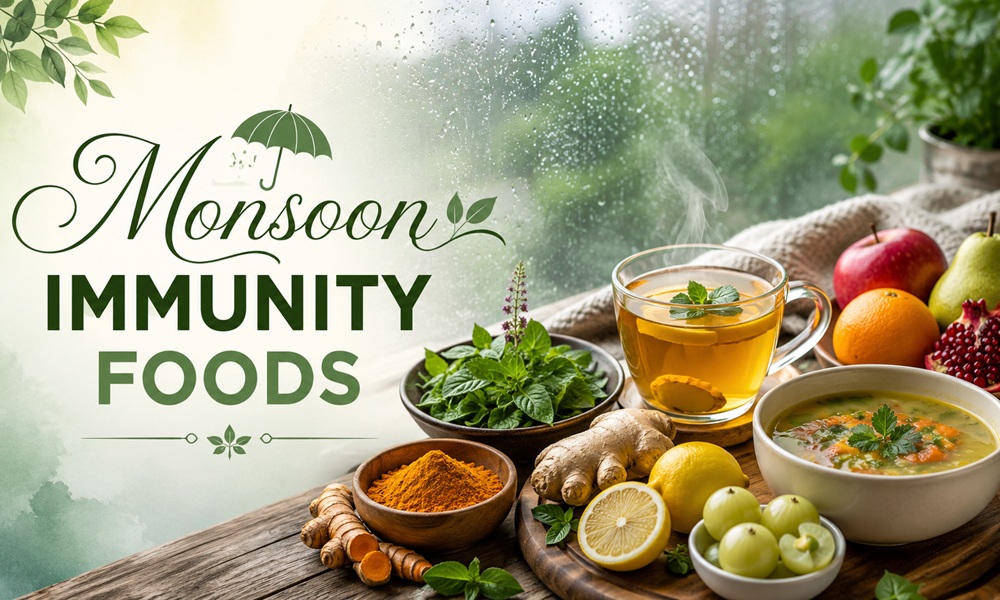
What This Article Has :• Vitamin C + iron pairing trick: eating guava with rajma boosts iron absorption 2–3x. • Turmeric works dramatically better with black pepper — piperine boosts curcumin absorption ~2000% (yes, twenty-fold). • Garlic’s allicin is destroyed by direct heat — the crush-and-rest-10-minutes method preserves it. • Why kefir or kanji beats plain curd for monsoon gut immunity. • A 1-teaspoon ghee swap in your dal cuts inflammation more measurably than expensive supplements. |
Why the Rains Test Your Immunity
Monsoon brings cool relief and a wave of infections. Cold, flu, viral fever, stomach bugs, dengue, malaria, and fungal skin issues all spike. Your immune system pulls double duty for 3–4 months.
You don’t need expensive supplements. The right foods, eaten daily, give your body what it needs to fight back. Here are 12 that work — with the pairing science that makes them work harder.
Food #1: Ginger
Nutrition Profile
Per 100 g — Vitamin B6, manganese, magnesium, gingerols and shogaols (the active anti-inflammatory compounds).
Why It Helps in Monsoon
Reduces gut inflammation, fights nausea, eases throat infections, supports digestion when humidity slows it down.
Best Way to Use
Chew a small piece with rock salt 10 minutes before lunch. Or boil grated ginger in water with honey and lemon as morning tea.
Pair With
Honey + lemon = triple immunity tea. Tulsi for extra respiratory support.
Food #2: Turmeric (With Black Pepper)
Nutrition Profile
Curcumin is the headline compound — one of the most-studied natural anti-inflammatories in modern medicine.
Why It Helps in Monsoon
Reduces inflammation, supports liver detox, has documented antimicrobial properties.
Best Way to Use
Daily haldi doodh (golden milk) at bedtime: 1 cup warm milk + 1/2 tsp turmeric + pinch of black pepper + 1/2 tsp ghee.
Pair With
Black pepper is non-negotiable. Piperine in pepper boosts curcumin absorption by approximately 2000%. Add a healthy fat (ghee, coconut oil) for further absorption.
Food #3: Garlic
Nutrition Profile
Allicin is the key compound — formed when garlic is crushed. Sulphur compounds, vitamin C, vitamin B6, manganese.
Why It Helps in Monsoon
Documented antimicrobial properties. Helps with cold and flu prevention.
Best Way to Use
The crucial step: crush 1–2 cloves and let them rest for 10 minutes BEFORE cooking. This activates the allicin. Then add to cooking near the end (high heat destroys it).
Pair With
Olive oil, ginger, lemon. Skip raw garlic on empty stomach if you have acidity.
Food #4: Tulsi (Holy Basil)
Nutrition Profile
An adaptogen — helps the body manage stress. Contains eugenol, ursolic acid, and rosmarinic acid.
Why It Helps in Monsoon
Reduces respiratory issues, calms stress-related immunity dips, anti-inflammatory.
Best Way to Use
5–7 fresh leaves chewed raw on an empty stomach, or boiled in chai. Tulsi-ginger-lemon-honey tea is monsoon classic.
Pair With
Ginger and honey amplify respiratory benefits.
Food #5: Citrus Fruits — Oranges, Sweet Lime, Lemons
Nutrition Profile
High vitamin C, flavonoids, fibre.
Why It Helps in Monsoon
Vitamin C supports white blood cell function — your frontline infection fighters.
Best Way to Use
Eat whole, not just juice. Whole fruit retains fibre and slow-releases vitamin C through the day.
Pair With
Eat with iron-rich foods (dal, sprouts) at the same meal — vitamin C multiplies iron absorption.
Food #6: Guava
Nutrition Profile
One guava has roughly 4x the vitamin C of an orange. Plus fibre, potassium, and antioxidants.
Why It Helps in Monsoon
Highest natural vitamin C source easily available; supports immunity and skin health.
Best Way to Use
One medium guava as afternoon snack, with a pinch of black salt and chaat masala if preferred.
Pair With
Eat with sprouts or lentils for an iron-vitamin C combo. Avoid eating at night (cooling effect).
Food #7: Raw Honey
Nutrition Profile
Antimicrobial enzymes, antioxidants, glucose oxidase. Charak Samhita specifically recommends honey in monsoon.
Why It Helps in Monsoon
Soothes throat infections, antimicrobial properties, balances mucus.
Best Way to Use
1 teaspoon in warm (NOT hot) water with lemon every morning. Never give to babies under 1 year.
Pair With
Lemon and ginger. Avoid heating above 40°C — destroys enzymes.
Food #8: Yogurt, Kefir, or Kanji
Nutrition Profile
Probiotics — live beneficial bacteria. Calcium, protein, B vitamins.
Why It Helps in Monsoon
Probiotics strengthen gut immunity — and 70% of your immune system lives in the gut.
Best Way to Use
In monsoon, prefer kefir or kanji over plain curd. If using curd, dilute into buttermilk with roasted cumin and a pinch of black salt.
Pair With
Flaxseed or chia for prebiotic + probiotic synergy.
Food #9: Almonds
Nutrition Profile
Vitamin E, zinc, magnesium, healthy fats, protein.
Why It Helps in Monsoon
Vitamin E for skin barrier and immune cell function; zinc is critical for immune response.
Best Way to Use
5–6 almonds soaked overnight, peeled, eaten first thing in the morning.
Pair With
Dates and a glass of warm milk for complete nutrition.
Food #10: Green Tea
Nutrition Profile
EGCG (epigallocatechin gallate) is the headline antioxidant. Polyphenols, L-theanine.
Why It Helps in Monsoon
Antimicrobial; antioxidants reduce oxidative stress during illness.
Best Way to Use
2 cups daily, ideally between meals (tannins block iron if consumed with meals).
Pair With
Lemon — boosts catechin absorption. Honey for taste and antimicrobial synergy.
Food #11: Cow Ghee
Nutrition Profile
Butyric acid (anti-inflammatory short-chain fatty acid), vitamins A, D, E, K.
Why It Helps in Monsoon
Butyric acid reduces gut inflammation, which translates to 70% of immune function.
Best Way to Use
1 teaspoon in dal, on the first roti, or on top of rice. Avoid hydrogenated ‘vegetable ghee’ — opposite effect.
Pair With
Turmeric (golden milk), rice and dal (Ayurveda’s foundation), warm water for digestion.
Food #12: Papaya
Nutrition Profile
Papain enzyme, vitamin C, vitamin A (as beta-carotene), folate.
Why It Helps in Monsoon
Papain aids the slowed monsoon digestion; vitamins boost immunity and skin defense.
Best Way to Use
Half a medium papaya as breakfast or mid-morning snack. Pregnant women should avoid unripe papaya.
Pair With
Lemon juice and a pinch of black salt.
Pairing Combinations That Multiply Benefits
| Pairing | Why It Works |
| Turmeric + black pepper + ghee | 20x curcumin absorption |
| Vitamin C + iron foods | 2–3x iron absorption |
| Garlic (crushed, rested) + olive oil | Maximum allicin retention |
| Ginger + lemon + honey | Triple respiratory immunity |
| Yogurt + flaxseed | Probiotic + prebiotic synergy |
| Almonds + dates + milk | Complete morning nutrition |
Daily Immunity Schedule
| Time | Eat This |
| 6:30 AM | Warm water with lemon + honey + ginger + 5 tulsi leaves |
| 8:00 AM | Soaked almonds + papaya or guava |
| Lunch | Dal with cow ghee + rice + ginger pickle (small) |
| 4 PM | Green tea with lemon OR turmeric milk |
| Dinner | Light soup with garlic and pepper |
| Bedtime | Haldi doodh (small cup) |
What to Avoid That Quietly Weakens Immunity
- Street food and pre-cut fruits (contamination risk)
- Raw leafy greens — wash thoroughly or cook
- Sugary cold drinks (suppress white blood cells for 4+ hours after)
- Excess fried foods (slow digestion = stressed immunity)
- Plain water that hasn’t been boiled or filtered
- Late-night heavy meals (poor sleep = weakened immunity)
| The Most Underrated Immunity Booster
Sleep — 7–8 hours of consistent quality sleep does more for your immune system than any food or supplement on this list. Pair good food with good sleep, and you genuinely become resistant to monsoon infections. Most people focus on food and ignore sleep — don’t make that mistake. |
