

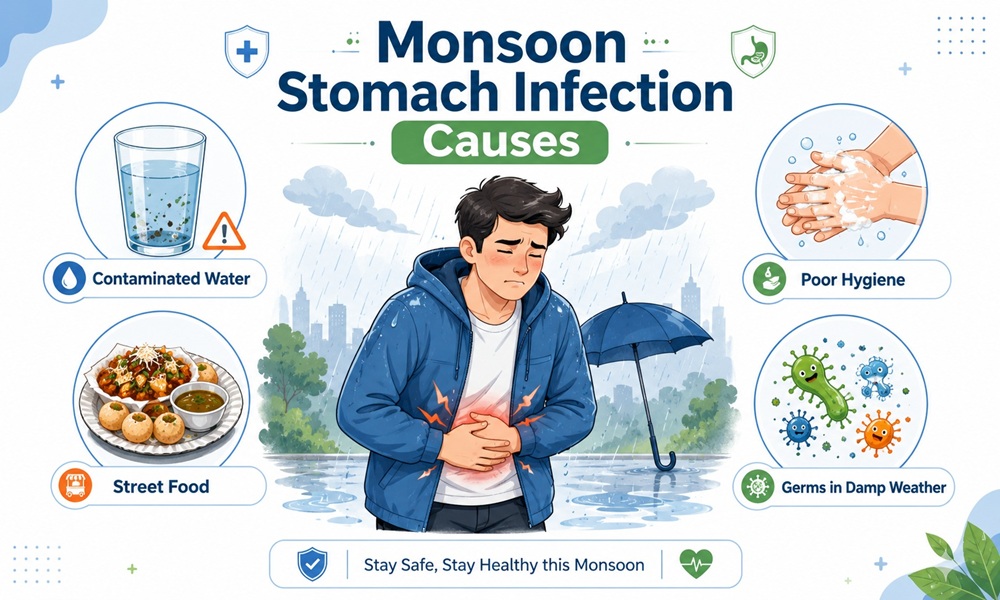
The rains bring relief from the heat, but they also create ideal conditions for stomach bugs. Understanding why — and what to avoid — keeps the season enjoyable rather than miserable.
Why stomach infections spike in the monsoon
- Contaminated water: flooding and poor drainage mix sewage with drinking water, spreading germs.
- Humidity: warm, damp air helps bacteria multiply faster on food and surfaces.
- Stagnant water: pooled water becomes a breeding ground for microbes and mosquitoes.
- Street and stale food: exposed, reheated, or cut-and-kept foods are easily contaminated in the rains.
- Lower immunity: sudden weather swings can leave the body more vulnerable.
Common monsoon stomach illnesses
| Illness | Caused by | Typical symptoms |
| Gastroenteritis | Bacteria, viruses, parasites | Vomiting, diarrhoea, cramps, nausea |
| Typhoid | Salmonella Typhi (food/water) | Prolonged fever, stomach pain, headache, weakness |
| Cholera | Vibrio cholerae (contaminated water) | Heavy watery diarrhoea, dehydration, cramps |
| Hepatitis A / E | Virus (food/water) | Jaundice, nausea, fatigue, tummy discomfort |
| Food poisoning | Contaminated/stale food | Sudden vomiting, diarrhoea, cramps |
| CONTEXT FROM PUBLIC-HEALTH DATA
Waterborne illness is a large monsoon burden in India — health bodies estimate millions of waterborne-disease cases each year, with children especially vulnerable due to developing immunity. Cases of gastroenteritis in particular tend to climb during the rainy months, which is why prevention is far easier than cure. |
Symptoms to watch for
- Loose or watery stools and stomach cramps.
- Nausea and vomiting.
- Fever and body aches (more with typhoid or infection).
- Signs of dehydration: dark urine, dizziness, dry mouth, weakness.
Monsoon prevention checklist
- Drink safe water: boil, filter, or use sealed bottled water; avoid roadside ice.
- Eat fresh and hot: prefer home-cooked, freshly prepared meals; avoid stale or reheated food.
- Skip risky street food and pre-cut fruits left exposed.
- Wash hands with soap before eating and after using the toilet.
- Wash produce thoroughly in clean water; peel where you can.
- Keep food covered and store leftovers properly; do not leave cooked food out for long.
- Keep ORS at home to rehydrate quickly if illness strikes.
Eating out safely in the rains
You don’t have to avoid eating out entirely — just choose carefully when humidity and contamination risk are high.
- Prefer busy, hygienic places with high turnover, so food is fresh.
- Choose hot, freshly cooked dishes over cold, pre-prepared, or buffet items left standing.
- Skip raw salads, chutneys, cut fruit, and ice made from unknown water.
- Carry your own water or stick to sealed bottled water.
- When unsure, pick freshly cooked, piping-hot options.
Support your gut’s defences
A resilient gut copes better with the season. Eat freshly cooked, home-style meals, include probiotic and fermented foods like curd, stay well hydrated with safe water, and get enough sleep. Wash and store produce properly, and keep kitchen surfaces clean. These small habits, kept up through the monsoon, do more to prevent stomach infections than any single remedy.
| SEE A DOCTOR IF…
Symptoms include high or persistent fever, blood in stool or vomit, severe or constant abdominal pain, signs of dehydration (little or no urine, dizziness, sunken eyes), jaundice (yellow eyes/skin), or symptoms lasting more than 2–3 days. Infants, elderly, pregnant women, and those with weak immunity should be seen early. |
