

| ⚡ What Most Articles Miss Entirely
Night hunger is often NOT about willpower. Hormonal research now shows that ghrelin (hunger hormone) can spike at night while leptin (fullness hormone) is suppressed — meaning your body is biologically telling you to eat at 11 PM. People with Night Eating Syndrome consume 25%+ of their daily calories after dinner. Up to 1.5% of the general population has full NES, with millions more on the spectrum. Calling it “weakness” misses the real biological pattern. |
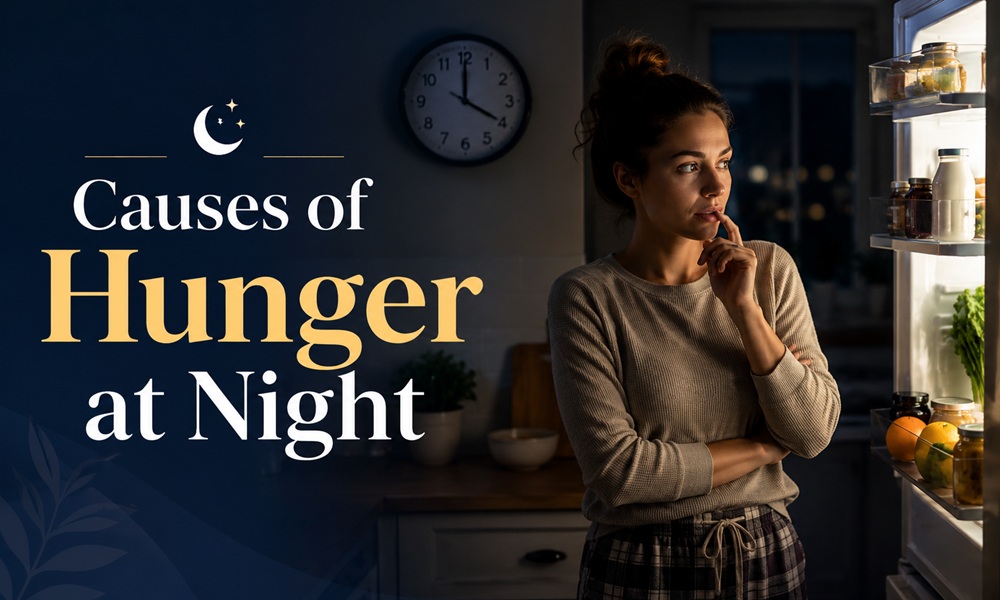
It is 10:30 PM. You ate dinner just 3 hours ago. But somehow, you are standing in front of the fridge, hunting for something to eat. Sound familiar?
Hunger at night is one of the most common eating struggles — and contrary to popular belief, it is rarely about lack of willpower. There are real biological, psychological, and lifestyle drivers behind it.
Is Hunger at Night Normal?
Occasional late-night hunger is normal. But if it happens daily, disrupts your sleep, leads to overeating, or makes you feel out of control — it is worth understanding why.
The 10 Real Causes of Hunger at Night
1. You’re Not Eating Enough During the Day
This is the #1 cause. Skipping breakfast, eating a tiny lunch, or being too busy to eat properly = your body asks for food at night to make up the difference.
2. Hormonal Imbalance (Ghrelin and Leptin)
Ghrelin (the hunger hormone) is supposed to drop at night. In people with disrupted patterns, it actually rises. Leptin (the fullness hormone) does the opposite — making you feel unsatisfied even after eating.
3. Poor Sleep
Sleeping less than 6 hours raises ghrelin by up to 28% and lowers leptin by 18%. Sleep deprivation literally makes you hungrier — especially for sugary, high-fat foods.
4. Stress and Emotional Eating
Cortisol (the stress hormone) rises during stressful evenings. It increases cravings for comfort foods — sweet, salty, fatty options.
5. Blood Sugar Crash
A high-sugar dinner spikes blood sugar, then crashes a few hours later — waking you up hungry, even shaky.
6. Habit and Boredom
Eating in front of the TV every night creates a strong neural association. Even when you are not hungry, the cue (relaxing on the couch) triggers eating.
7. Dehydration
Your brain often mistakes thirst for hunger, especially in the evening.
8. Circadian Rhythm Disruption
Night-shift workers and “night owl” sleep patterns shift hunger hormone peaks to later hours.
9. Night Eating Syndrome (NES)
A clinical condition where 25%+ of daily calories are eaten after dinner, with little morning hunger, trouble falling/staying asleep, and a need to eat to fall back asleep. Often linked to anxiety or depression.
10. Medical Conditions
Diabetes, hyperthyroidism, hypoglycemia, certain medications, and pregnancy can all cause genuine nighttime hunger.
Signs You May Have Night Eating Syndrome
- Eating 25%+ of your daily calories after dinner
- No or little hunger in the morning
- Skipping breakfast regularly
- Waking up at night specifically to eat
- Difficulty falling asleep without eating something
- Feeling distressed, guilty, or out of control around food at night
- Pattern continues for 3+ months
If most of these apply to you, talk to a doctor or therapist — NES is treatable.
Quick Comparison: Real Hunger vs. Cravings
| Real Hunger | Cravings (Not Real Hunger) |
| Comes on gradually | Comes on suddenly |
| Any food sounds good | Want one specific food (sweet, salty) |
| Stomach growls | No physical signs |
| Hunger grows over time | Goes away if distracted |
| Feels like fuel-need | Feels emotional |
| Satisfied by a balanced meal | Only satisfied by the specific craving |
How to Stop Nighttime Hunger: A Step-By-Step Plan
Step 1: Fix Your Daytime Eating
- Eat breakfast within 2 hours of waking — even something small.
- Include protein and fiber at every meal.
- Eat lunch — do not skip.
- Have a balanced afternoon snack to prevent dinner overeating.
Step 2: Build a Filling Dinner
- Include lean protein (paneer, chicken, fish, dal, eggs).
- Add complex carbs (brown rice, millets, oats).
- Plenty of vegetables for fiber.
- A small portion of healthy fats (ghee, nuts, olive oil).
Step 3: Set a “Kitchen Closed” Time
- Decide when you stop eating (e.g., 9 PM).
- Brush your teeth right after — it signals the brain that eating is done.
- Move away from the kitchen for the rest of the evening.
Step 4: Manage Stress and Boredom
- Identify your trigger (stress, boredom, loneliness, TV).
- Replace eating with: a walk, calling a friend, journaling, herbal tea.
- Limit screen time at night.
Step 5: Improve Sleep
- Aim for 7–9 hours.
- Keep a consistent bedtime.
- No screens 1 hour before bed.
- Bedroom cool, dark, quiet.
Step 6: Hydrate
- Drink a glass of water when night hunger hits — wait 10 minutes.
- If still hungry, eat a small, balanced snack.
Smart, Small Snacks if You’re Really Hungry at Night
- A handful of almonds or walnuts
- Greek yogurt with a few berries
- A banana with peanut butter
- A boiled egg
- A small bowl of oats with milk
- Roasted chickpeas
- A cup of warm milk with a pinch of turmeric
Avoid: chips, biscuits, sweets, ice cream, fried snacks, soda.
Foods That Help Curb Night Hunger Naturally
| Food | Why It Helps |
| Oats | Slow-digesting carbs, very filling |
| Eggs | High in protein and satiety hormones |
| Greek yogurt | Protein + tryptophan for sleep |
| Almonds | Magnesium and healthy fats |
| Banana | Fiber, potassium, helps sleep |
| Chamomile tea | Soothes anxiety, no calories |
| Cottage cheese (paneer) | Casein protein keeps you full overnight |
When to See a Doctor
Talk to a doctor or therapist if you have a clear pattern of night eating for 3+ months, feel out of control around food at night, are gaining weight despite efforts, have other symptoms like extreme thirst, frequent urination, or shaking (could be diabetes or hypoglycemia), are struggling with depression or anxiety, or have insomnia tied to eating. Possible tests include fasting blood sugar and HbA1c, thyroid panel, and screening for depression, anxiety, or eating disorders.
FAQs
Why am I hungry at night but not in the morning?
This pattern strongly suggests your circadian eating rhythm has shifted. The fix: force yourself to eat breakfast for 2 weeks. Morning hunger usually returns.
Is eating at night bad for weight loss?
It’s not the time, it’s the total calories that matter. But night eaters often overeat because cues like TV and stress are different.
Will drinking water at night help?
Often yes — many “hungry” feelings are actually thirst.
Is Night Eating Syndrome the same as binge eating disorder?
No. Binge eating involves consuming large amounts quickly with loss of control. NES involves smaller amounts spread through the evening and night, often linked to sleep disruption.
Can hormones cause night hunger in women?
Yes — fluctuations during the menstrual cycle (especially the luteal phase), pregnancy, and perimenopause all increase nighttime appetite.
