

| QUICK ANSWER
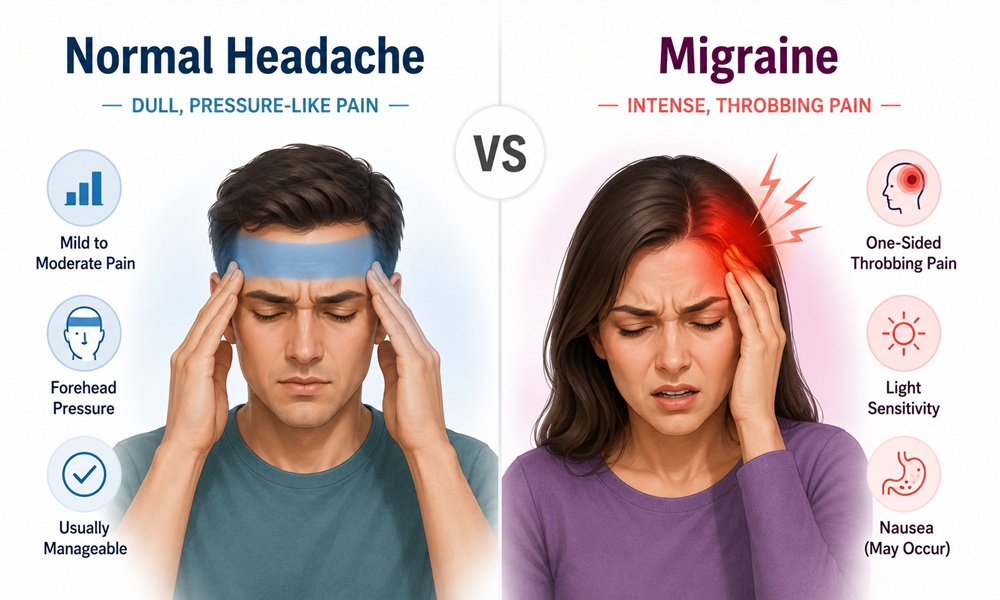
A normal (tension) headache feels like a dull, tight band of pressure on both sides of the head, and you can usually carry on with your day. A migraine is a neurological condition — the pain is often throbbing, on one side, moderate to severe, and joined by nausea, light or sound sensitivity, and sometimes visual aura. Migraines can be disabling and last 4 to 72 hours. |
‘It’s just a headache’ undersells what a migraine actually is. A tension headache is muscle and stress related; a migraine is a brain-based disorder. The checklist below helps you tell which you are dealing with.
Quick self-check: tick what applies
The more of these you tick, the more likely it is a migraine rather than an ordinary headache:
- Pain throbs or pulses (rather than a steady ache).
- Pain is on one side of the head.
- Pain is moderate to severe.
- It gets worse with movement, light, or noise.
- You feel nauseous or actually vomit.
- You need to lie down in a dark, quiet room.
- You sometimes see flashing lights, zig-zags, or blind spots before it starts (aura).
| THE ‘POUND’ MEMORY AID FOR MIGRAINE
Doctors sometimes use POUND: Pulsating pain, duration of One day (4–72 hrs), Unilateral (one-sided), Nausea, and Disabling intensity. The more of these features present, the more likely the headache is a migraine. |
Migraine vs tension headache: comparison
| Feature | Tension headache | Migraine |
| Pain type | Dull, tight, pressing | Throbbing, pulsing |
| Location | Both sides, band-like | Often one side |
| Severity | Mild to moderate | Moderate to severe |
| Duration | 30 min to a few days | 4 to 72 hours |
| With movement | Little change | Usually worse |
| Nausea | Rare | Common |
| Light/sound | Mild or none | Strong sensitivity |
| Aura | No | Sometimes |
| Daily function | Usually possible | Often disrupted |
The four phases of a migraine (that headaches don’t have)
Unlike a plain headache, a migraine can unfold in stages — knowing them helps you treat it early:
- Prodrome (hours to a day before): mood changes, food cravings, neck stiffness, yawning, fatigue.
- Aura (in some people): visual zig-zags, flashing lights, tingling, or speech changes.
- Headache: the throbbing pain phase with nausea and sensitivity.
- Postdrome (the ‘migraine hangover’): feeling drained, foggy, or washed out for a day after.
| AN INSIGHT OFTEN LEFT OUT: MEDICATION-OVERUSE HEADACHE
Taking painkillers too often — roughly more than 10–15 days a month — can paradoxically cause a new, near-daily headache called medication-overuse (rebound) headache. If your headaches are getting more frequent and you are reaching for pills most days, this could be the reason, and it needs a doctor’s help to break the cycle. |
| RED-FLAG HEADACHES — SEEK CARE NOW
Get urgent help for: a sudden ‘worst headache of my life’ that peaks in seconds (thunderclap), a headache with fever and stiff neck, weakness, numbness, slurred speech or vision loss, a headache after a head injury, or a new severe headache after age 50. These need immediate assessment. |
How treatment differs
Tension headaches usually respond to rest, hydration, stress relief, better posture, and occasional over-the-counter pain relief. Migraines often need specific medicines (such as triptans) taken early, plus trigger management; frequent migraines may need preventive treatment from a doctor.
Cut your migraine days: prevention basics
Migraines are easier to live with when you reduce the triggers that stack up before an attack. Small, steady habits matter more than any single fix.
- Keep a regular routine. Consistent sleep, meals, and hydration steady the brain’s thresholds.
- Spot your patterns. A diary linking attacks to sleep, food, stress, and hormones reveals personal triggers.
- Limit painkiller overuse. Using acute medicines on too many days can cause rebound headaches.
- Manage stress and screens. Regular breaks, movement, and relaxation lower attack frequency.
If you have migraines on several days a month, or they disrupt work and life, ask about preventive treatment — there are now several effective options a doctor can tailor to you.
FAQ
Can a tension headache become a migraine?
They are different conditions, but a tension headache can sometimes trigger a migraine in people prone to them, and the two can occur together.
What are common migraine triggers?
Stress, skipped meals, poor sleep, dehydration, bright lights, strong smells, hormonal shifts, and certain foods. Keeping a headache diary helps you spot your own pattern.
Is a daily headache normal?
No. Headaches on most days of the month should be checked, as they may indicate chronic migraine, medication-overuse headache, or another cause.
